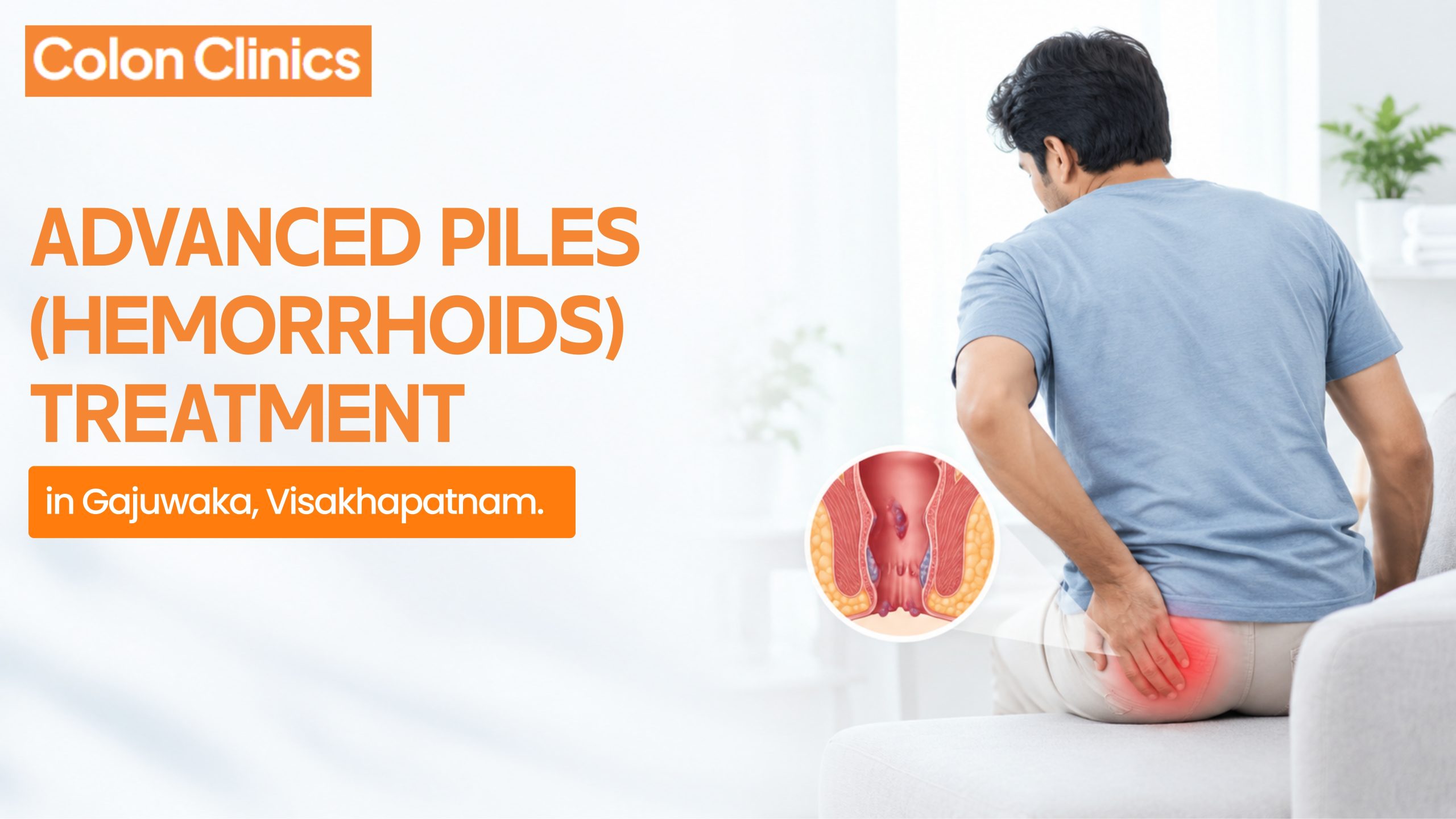
Piles, medically known as hemorrhoids, are swollen and inflamed blood vessels around the anus or lower rectum. They can cause discomfort, itching, bleeding, swelling, and pain, particularly during bowel movements. While mild piles may improve with lifestyle changes and medicines, advanced or recurrent hemorrhoids may require specialized medical treatment.
If you are experiencing persistent symptoms, seeking timely evaluation from a qualified colorectal specialist can help identify the severity of the condition and determine an appropriate treatment plan. Colon Clinics provides specialized care for patients looking for hemorrhoids treatment in Gajuwaka and surrounding areas. Under the guidance of Dr. Baipalli Ramesh, patients can receive individualized evaluation and treatment based on their symptoms and hemorrhoid grade.
What Are Hemorrhoids?
Hemorrhoids are swollen veins in the lower rectum or around the anus. They can develop when increased pressure is placed on these blood vessels, causing them to become enlarged and symptomatic.
Hemorrhoids are generally classified into two main types:
- Internal hemorrhoids: These develop inside the rectum and may cause painless bleeding during bowel movements. In advanced stages, they may protrude through the anus.
- External hemorrhoids: These develop under the skin around the anus and may cause pain, swelling, itching, or a tender lump.
Hemorrhoids can occur at any age, but the risk may increase due to constipation, prolonged sitting, straining during bowel movements, pregnancy, obesity, and other factors.
Common Symptoms of Piles
The symptoms of hemorrhoids can vary depending on their location and severity. Common symptoms include:
- Bright red blood during or after bowel movements
- Pain or discomfort around the anus
- Itching or irritation
- Swelling around the anal region
- A lump or bulge near the anus
- Mucus discharge in some cases
- A feeling of incomplete bowel emptying
- Discomfort while sitting
Ignoring persistent symptoms may allow the condition to worsen and may increase the need for procedural or surgical treatment in some cases.
What Causes Piles?
Several factors can contribute to the development of piles. Increased pressure on the veins around the anus and rectum is one of the common causes.
Common causes and risk factors include:
- Chronic constipation
- Straining during bowel movements
- Spending a long time sitting on the toilet
- Low-fibre diet
- Insufficient water intake
- Prolonged sitting
- Pregnancy
- Obesity
- Repeated heavy lifting
- A sedentary lifestyle
- Family history of hemorrhoids
Making appropriate lifestyle changes can help reduce the risk of piles and prevent symptoms from becoming worse.
Understanding the Different Grades of Hemorrhoids
Internal hemorrhoids are commonly classified into four grades depending on the degree of prolapse.
1. Grade I Hemorrhoids
Grade I hemorrhoids remain inside the rectum and generally do not protrude through the anus. Bleeding may be the main symptom. Treatment may include dietary changes, adequate hydration, fibre, bowel habit modifications, and medications when appropriate.
2. Grade II Hemorrhoids
Grade II hemorrhoids may protrude during bowel movements or straining but usually return inside on their own. Depending on the symptoms and clinical findings, non-surgical or minimally invasive treatments may be considered.
3. Grade III Hemorrhoids
Grade III hemorrhoids protrude during bowel movements and may need to be manually pushed back inside. Patients may experience bleeding, discomfort, irritation, and difficulty with daily activities. Advanced treatment may be recommended when symptoms persist or conservative measures are unsuccessful.
4. Grade IV Hemorrhoids
Grade IV hemorrhoids remain prolapsed outside the anus and cannot usually be pushed back manually. They may cause significant discomfort, irritation, bleeding, and hygiene difficulties. In such cases, a specialist may recommend a procedural or surgical approach based on the patient’s condition.
Advanced Piles Treatment Options at Colon Clinics
The appropriate treatment depends on the grade of hemorrhoids, symptoms, previous treatments, overall health, and clinical examination. At Colon Clinics, Vizag, treatment can be planned based on individual requirements.
1. Lifestyle and Medical Management
For early-stage hemorrhoids, treatment may begin with measures that reduce constipation and straining. These can include:
- Increasing dietary fibre
- Drinking adequate fluids
- Avoiding prolonged sitting on the toilet
- Maintaining regular physical activity
- Preventing constipation
- Following prescribed medications or topical treatments
These measures can also support recovery after certain procedures.
2. Laser Hemorrhoid Treatment
Laser treatment is a minimally invasive approach that may be considered for selected hemorrhoid cases. Laser energy is used to treat the affected hemorrhoidal tissue while aiming to minimize damage to surrounding tissues. Depending on the patient’s condition, this approach may offer benefits such as less postoperative discomfort and a quicker return to normal activities.
3. Stapled Hemorrhoidopexy
Stapled hemorrhoidopexy may be considered for selected cases of prolapsing internal hemorrhoids. The procedure moves the prolapsed hemorrhoidal tissue back into its normal position and reduces its blood supply. Whether this technique is appropriate depends on the individual patient’s condition and clinical assessment.
4. Rubber Band Ligation
Rubber band ligation is commonly used for selected internal hemorrhoids, particularly when they cause bleeding or prolapse. A small rubber band is placed around the base of the hemorrhoid, cutting off its blood supply. The treated tissue gradually shrinks and falls away. This procedure is generally performed without a major surgical incision.
5. Surgical Hemorrhoidectomy
Hemorrhoidectomy involves surgically removing problematic hemorrhoidal tissue. It may be recommended for large, severe, or prolapsing hemorrhoids when other treatment options are not appropriate. The choice of surgical technique depends on the grade and characteristics of the hemorrhoids.
Dr. Baipalli Ramesh can explain the available treatment options, expected recovery, and possible risks based on the patient’s individual condition before proceeding with treatment.
Lifestyle Tips to Manage and Prevent Piles
Along with medical treatment, healthy bowel habits can help manage hemorrhoid symptoms and reduce the risk of recurrence.
Consider the following measures:
- Eat fibre-rich foods such as vegetables, fruits, whole grains, and legumes.
- Drink adequate water throughout the day.
- Avoid excessive straining during bowel movements.
- Do not sit on the toilet for unnecessarily long periods.
- Stay physically active.
- Avoid ignoring the urge to pass stools.
- Maintain a healthy body weight.
- Follow your doctor’s treatment and follow-up recommendations.
These measures may help reduce pressure on the veins around the anus and promote healthier bowel habits.
Why Early Treatment Matters
Many people delay piles treatment because they feel embarrassed discussing symptoms around the anal region. However, delaying evaluation can allow symptoms to persist and may make everyday activities increasingly uncomfortable.
Early consultation can help determine whether the symptoms are actually caused by hemorrhoids and whether conservative management or a procedure is appropriate.
It is also important to remember that symptoms such as rectal bleeding can have causes other than piles. Proper diagnosis should therefore come before deciding on treatment.
When Should You See a Piles Specialist?
Consider consulting a specialist if you experience:
- Repeated rectal bleeding
- Persistent anal pain
- A lump or swelling around the anus
- Hemorrhoids that keep coming back
- Severe itching or irritation
- Difficulty passing stools
- Symptoms that interfere with sitting, working, or daily activities
Seek prompt medical attention if bleeding is heavy or accompanied by dizziness, weakness, severe pain, or other concerning symptoms.
Why Choose Colon Clinics for Hemorrhoid Treatment in Gajuwaka?
Choosing an experienced specialist is important when piles become persistent, recurrent, or advanced. Colon Clinics focuses on the evaluation and management of colorectal and anorectal conditions.
Patients seeking hemorrhoids treatment in Visakhapatnam can benefit from:
- Detailed evaluation of hemorrhoid symptoms
- Assessment of hemorrhoid grade and severity
- Personalized treatment planning
- Appropriate use of medical, minimally invasive, or surgical options
- Guidance for preventing recurrence
- Professional follow-up and recovery support
Dr. Baipalli Ramesh provides specialized colorectal care and evaluates patients based on their individual symptoms and clinical requirements.
Get Advanced Hemorrhoids Treatment in Gajuwaka, Visakhapatnam
Piles are common and treatable, but persistent or advanced symptoms should not be ignored. With appropriate diagnosis and individualized treatment, many patients can achieve significant relief from bleeding, pain, swelling, and prolapse.
For individuals seeking hemorrhoids treatment in Gajuwaka, Visakhapatnam, Colon Clinics under the guidance of Dr. Baipalli Ramesh offers evaluation and treatment options based on the patient’s specific condition. Seeking timely medical attention can help manage symptoms effectively and prevent complications associated with untreated or recurrent hemorrhoids.
If you are experiencing symptoms of piles, don’t delay treatment. Book your consultation today at Colon Clinics, and take the right step toward effective hemorrhoid care and lasting relief. Contact us at +91 7075559951.